
Turning on your hot tap in the morning only to be greeted by a rusty, brown stream can be an alarming experience for any homeowner. In San Antonio, where mineral-rich hard water and unique regional plumbing conditions place heavy stress on residential water heaters, rusty hot water is a frequent issue. Understanding what causes hot water discoloration—ranging from sacrificial anode rod depletion to heavy mineral sediment accumulation in tank water heaters—is essential for protecting your plumbing infrastructure and ensuring clean, safe water throughout your household [1] [3].
At Bluebonnet Plumbing, our licensed professionals assist homeowners across the San Antonio area during regular business hours with comprehensive diagnostics, water heater maintenance, and safe repair solutions. Promptly addressing hot water discoloration prevents minor internal tank corrosion from becoming catastrophic tank failure or costly water damage.
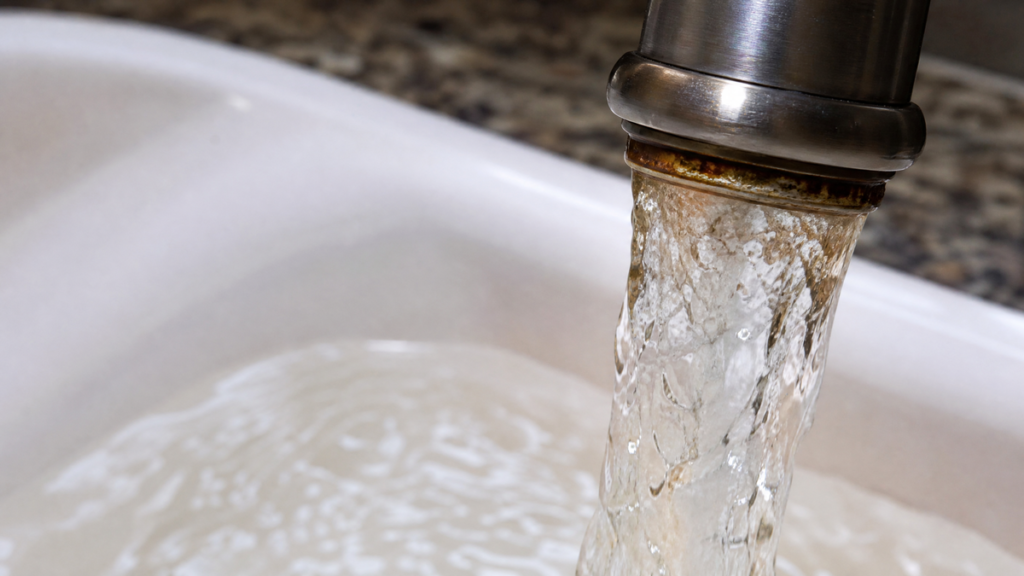
Brown or rust-colored water from a hot water tap often indicates failing anode rods or heavy tank sediment.
Understanding Why Hot Water Turns Rust-Colored in San Antonio
When rusty water emerges exclusively from your hot water taps while cold water remains clear, the source of the discoloration is almost always localized inside your water heater tank or within the dedicated hot water supply lines [3]. If both hot and cold water run brown or yellow, the issue typically originates from municipal water mains or corroding galvanized service lines entering the property, a subject explored further in our guide on San Antonio water quality and filtration.
San Antonio’s water supply is famously hard, containing high concentrations of dissolved calcium, magnesium, and other minerals originating from the Edwards Aquifer limestone strata [1]. As water is heated inside a traditional storage tank, these minerals precipitate out of solution and settle at the bottom of the tank. Over time, this thermal cycling combined with mineral deposits accelerates electrochemical reactions, leading to internal rust and discoloration.
Primary Culprit 1: Depleted Sacrificial Anode Rods
Every standard storage-type water heater is equipped with a sacrificial anode rod—a long metal core made of magnesium, aluminum, or zinc constructed around a steel wire. The scientific principle behind the anode rod is galvanic corrosion: because anode metals are more chemically active than the steel tank interior, corrosive elements in the water attack the anode rod instead of corroding the glass-lined steel tank walls [4].
In San Antonio’s aggressive mineral environment, anode rods can become completely consumed within three to five years. Once the anode rod is fully sacrificed and depleted, the corrosive minerals in the heated water begin attacking the exposed steel walls of the water heater tank. This results in rust formation, brown water discoloration, and eventual tank wall perforation [3]. Routine inspection and timely replacement of the anode rod by a licensed plumber can double the operational lifespan of a residential water heater.
Primary Culprit 2: Heavy Sediment and Mineral Buildup
As noted by the U.S. Department of Energy, regular thermal maintenance is critical for efficiency and longevity [3]. In South Texas, mineral scaling occurs rapidly. When dissolved calcium and magnesium settle at the bottom of a gas or electric water heater tank, they form a dense sediment layer right above the burner assembly or lower heating element.
This sediment blanket traps extreme heat beneath it, causing localized overheating of the tank floor. The excessive thermal stress cracks the glass lining, exposing raw steel to water and causing rust-colored water. Heavy sediment buildup also creates knocking or rumbling noises during heating cycles and reduces energy efficiency. Homeowners can learn more about preventive care through our detailed resource on why you need to flush your San Antonio water heater.
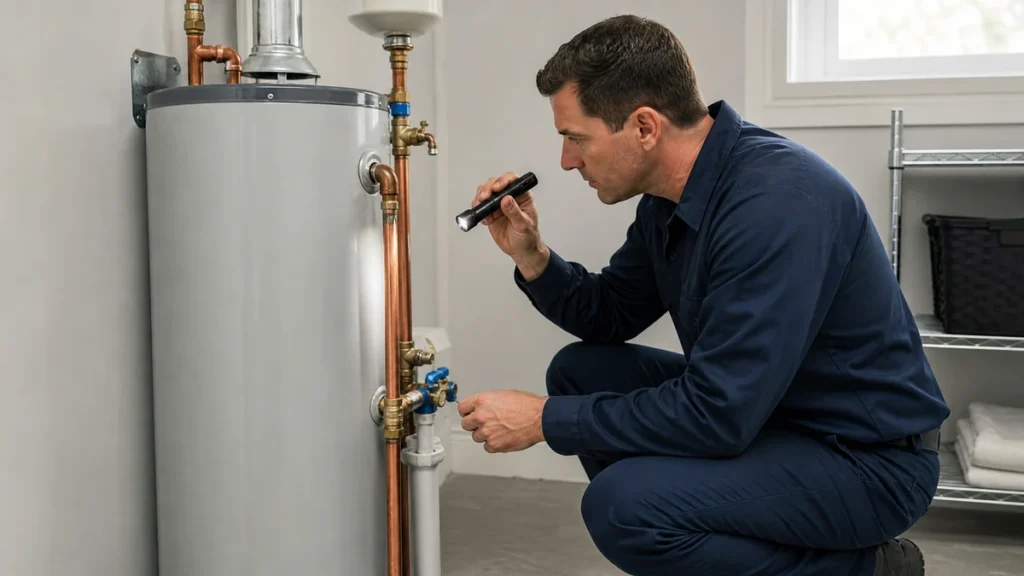
A licensed plumber examines water heater connections to diagnose rust and sediment issues.
Diagnostic Pathways: Is It Sediment, Anode Failure, or Tank Corrosion?
Accurately diagnosing the root cause of rusty hot water requires a methodical, professional evaluation. Plumbers follow specific diagnostic steps to determine whether a water heater can be saved through component replacement or if complete replacement is mandatory:
- Tap Isolation Test: Checking multiple hot water fixtures throughout the home. If only one sink fixture shows rust, the issue may be localized to an isolated corroding supply nipple or fixture aerator.
- Drain Valve Sampling: Drawing a water sample directly from the tank drain valve into a glass jar. Letting it settle reveals whether suspended sediment is present or if the water has a dissolved rust tint.
- Anode Rod Inspection: Removing the top anode rod plug to visually inspect the remaining core thickness. If less than 25% of the original sacrificial metal remains or the steel core wire is visible, immediate replacement is required.
- Tank Integrity Assessment: Evaluating the age of the unit (using the serial number manufacture date) and checking for exterior dampness or weeping tank seams, which indicate irreversible tank wall perforation.
For homeowners weighing whether to repair their existing traditional unit or transition to modern alternatives, reviewing our guide on tankless vs. traditional water heaters provides valuable insights into long-term system reliability.
Repair and Remediation Options for San Antonio Homeowners
Depending on the severity of the diagnosis and the age of the equipment, professional remediation generally follows one of several distinct paths:
| Diagnostic Condition | Primary Cause | Recommended Professional Action |
|---|---|---|
| Mild rust tint after long vacancy | Minor pipe oxidation/mineral settling | Complete tank flush and system purge |
| Moderate brown water, anode depleted | Sacrificial anode rod fully consumed | Anode rod replacement and sediment flush |
| Persistent heavy rust in 10+ year unit | Internal tank wall corrosion/failure | Complete water heater replacement |
Attempting DIY tank flushing or internal component replacement without proper training carries significant risks, including scalding hazards, gas valve damage, and water pressure surges. Furthermore, tampering with gas supply lines or electrical connections on water heaters requires certified professional expertise to comply with local building codes and safety regulations.
Protecting Your Plumbing Investment
Mitigating hard water aggression and preventing premature tank corrosion in San Antonio often involves installing a whole-home water softening system to reduce mineral loads before water enters your heater [1]. Coupled with annual professional inspections during regular business hours, proactive maintenance ensures your water heating system operates safely and efficiently for years to come.
Schedule Professional Water Heater Service
If you are noticing rust-colored water, strange rumbling noises, or inconsistent hot water temperatures in your San Antonio home, trust the experts at Bluebonnet Plumbing. Contact our team during business hours to schedule expert diagnosis and dependable service.
Call Us Today: (210) 934-5468
Request Service Online: Contact Bluebonnet Plumbing
Frequently Asked Questions
Is rust-colored hot water safe for bathing and washing dishes?
While iron and rust in drinking water are generally aesthetic nuisances rather than acute health hazards, bathing in heavily discolored water can cause skin irritation and stain clothing or fixtures. It is best to refrain from consuming or using rusty hot water until the underlying corrosion source is inspected and resolved by a professional.
Can flushing my water heater eliminate rusty water permanently?
If the discoloration is caused purely by loose mineral sediment settled at the base of the tank, a thorough professional flush can clear up the issue. However, if the rust is caused by a depleted anode rod or active tank wall corrosion, flushing alone will only provide temporary relief until the failing component is replaced.
How often should San Antonio homeowners replace their water heater anode rod?
In San Antonio’s hard water environment, sacrificial anode rods typically require inspection every two to three years and replacement every three to five years. Homes equipped with water softeners may experience slightly extended anode lifespans due to reduced mineral aggression.
When does rusty hot water mean I need a brand-new water heater?
If your water heater is over ten years old and rust discoloration is accompanied by brown water caused by internal tank wall corrosion—or if the tank shell is weeping moisture—repairing components is no longer viable. A full system replacement is required to prevent major tank failure and water damage.
References
- San Antonio Water System (SAWS). Water Quality Reports and Hard Water Management Guidelines.
- Texas Commission on Environmental Quality (TCEQ). Public Drinking Water Standards and Source Protection in Texas.
- U.S. Department of Energy (DOE). Water Heater Maintenance, Flushing, and Efficiency Guidelines.
- Energy Star. Residential Water Heaters: Tank Protection and Efficiency Standards.
- Plumbing-Heating-Cooling Contractors Association (PHCC). Residential Water Heater Troubleshooting and Safety Protocols.