
When San Antonio homeowners think about essential home maintenance, water heater care often takes a backseat until a sudden leak or cold shower disrupts the household. However, nestled quietly inside every traditional tank-type water heater is one of the most critical defensive components in residential plumbing: the sacrificial anode rod. Because the San Antonio Water System (SAWS) delivers municipal water drawn primarily from the Edwards Aquifer limestone formation, local water is classified as “very hard,” typically measuring between 15 and 20 grains per gallon (gpg) [1] [2]. This high concentration of dissolved calcium, magnesium, and aggressive minerals creates an electrochemical environment that actively attacks metal tanks. Without a functioning anode rod, hard water and mineral electrolysis will rapidly corrode the steel walls of your water heater, leading to premature tank failure and costly water damage.
At Bluebonnet Plumbing, our licensed plumbing professionals help homeowners across San Antonio and surrounding areas protect their water heating investments through proactive maintenance, expert inspections, and safe anode rod replacements. Understanding how sacrificial anodes function, recognizing the warning signs of depletion, and knowing when to schedule professional service can double the operational lifespan of your water heater.
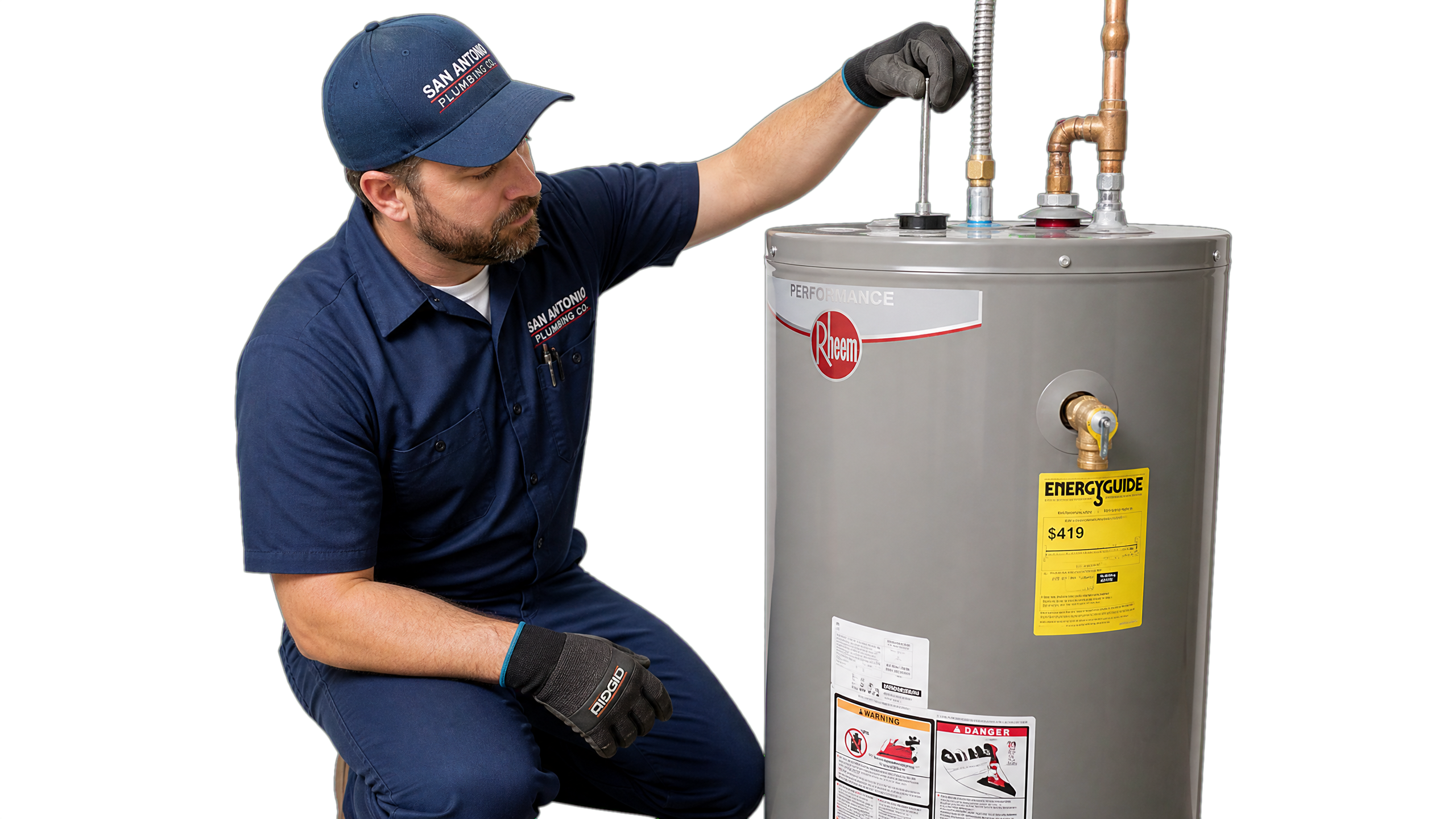
The Science of Sacrificial Anodes: How Anode Rods Protect Your Tank
To understand why an anode rod is vital, it helps to examine the electrochemical makeup of a standard storage water heater. A water heater tank is constructed of steel. While glass-lined inner tanks provide a primary barrier against water contact, microscopic fractures, weld lines, and thermal expansion cracks inevitably expose bare steel to water. When dissimilar metals (such as steel tank walls, copper water lines, and brass fittings) are submerged in mineral-rich water, an electrochemical battery cell is created.
An anode rod consists of a steel core wire surrounded by a thick cylinder of reactive metal—typically magnesium, aluminum, or a zinc-aluminum alloy. According to the galvanic series of metals, these sacrificial metals have a much lower electrical potential than steel. Consequently, corrosive minerals in the water attack the anode rod instead of the tank’s steel walls [3]. The rod literally sacrifices itself, dissolving slowly over time so that your water heater tank remains intact.
In San Antonio’s hard water environment, this electrochemical reaction occurs at an accelerated pace [4]. Minerals like calcium carbonate precipitate out of suspension when heated [5], compounding the corrosive chemical attack on both the anode rod and the bottom of the tank. For broader insights into managing hard water throughout your home, read our guide on Water Softener San Antonio: The Complete Guide to Solving Hard Water Problems in Your Home.
San Antonio Water Quality and Anode Depletion Rates
Water hardness levels in San Antonio rank among the highest in metropolitan Texas regions. As water percolates through the massive Edwards Aquifer limestone strata, it picks up substantial quantities of dissolved limestone, creating high levels of total dissolved solids (TDS) [6]. When this water enters a residential water heater and is heated to standard operating temperatures (typically 120°F to 140°F), mineral precipitation accelerates [5].
While standard manufacturer guidelines often suggest checking an anode rod every three to five years [3], local field conditions in San Antonio frequently require more vigilant oversight. In neighborhoods supplied by untreated or highly mineralized well water, or homes operating without a whole-house water softening system, sacrificial anode rods can be entirely consumed in as little as two to three years. Once a sacrificial rod is completely depleted, the electrochemical process shifts its target to the exposed steel of the tank interior, leading rapidly to pitting corrosion, tank leaks, and irreversible failure.
Routine maintenance such as tank flushing works hand-in-hand with anode inspections to remove heavy mineral sediment. To learn more about maintaining sediment-free tanks, explore our detailed resource on Why You Need to Flush Your San Antonio Water Heater (And How to Do It).
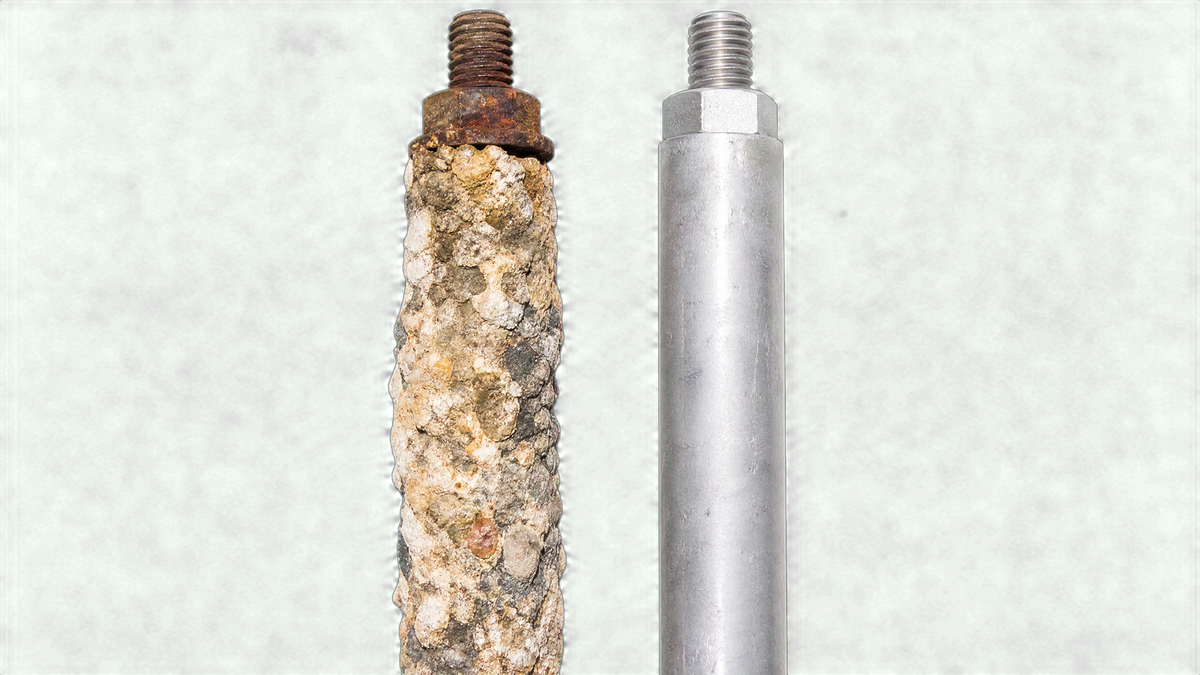
Key Warning Signs Your Water Heater Anode Rod Is Failing
Because anode rods are concealed inside the top of the water heater tank, homeowners cannot visually inspect them without removing the hex-head bolt. However, several distinct warning signs indicate that your anode rod is exhausted and requires immediate professional evaluation:
- Discolored or Rusty Hot Water: If your hot water exhibits a brownish or rust-colored tint while cold water runs clear, it indicates that the anode rod has dissolved entirely, and interior tank corrosion has begun [7].
- Foul Odor (Rotten Egg Smell): A sulfurous or rotten-egg odor in your hot water is frequently caused by sulfate-reducing bacteria reacting with hydrogen gas produced by deteriorating aluminum or magnesium anode rods.
- Popping or Rumbling Noises: Excessive mineral buildup and calcium scaling around a depleted anode rod and heating elements create popping sounds as trapped steam bubbles expand through sediment layers.
- Age of the Water Heater: If your traditional tank water heater is over three years old in San Antonio without a prior anode inspection, the rod is likely operating at half capacity or less.
Professional Inspection and Replacement: Why DIY Anode Service Carries Risks
While online video tutorials often portray anode rod replacement as a simple weekend DIY project, attempting to extract an anode rod without professional training carries significant risks. Anode rods are factory-installed with extreme torque using pneumatic impact wrenches, and after years of thermal cycling and mineral bonding in San Antonio hard water, they frequently seize tightly into the tank spud.
Applying excessive torque with standard hand wrenches in cramped residential utility closets or hot attic installations can easily crack the glass lining of the tank, twist water connections, or rupture gas and electrical fittings. Furthermore, working around pressurized hot water tanks and gas burner assemblies or 240-volt electrical connections presents severe safety hazards. Professional plumbers utilize specialized commercial socket tools, impact equipment, and torque control to safely extract seized rods without compromising tank integrity or personal safety.
Protect Your San Antonio Home from Water Heater Corrosion
Is your water heater more than three years old? Schedule a professional plumbing inspection and anode rod replacement with Bluebonnet Plumbing during our regular business hours to extend your tank’s lifespan and prevent catastrophic leaks.
Call us today at (210) 934-5468 or connect with our team online via our contact form to schedule service.
Choosing the Right Anode Rod Material for Your Home
When replacing a water heater anode rod, selecting the correct metal composition for your specific water profile is essential for long-term performance:
| Anode Rod Type | Material Composition | Best Suited For | Maintenance Considerations |
|---|---|---|---|
| Magnesium | High-purity magnesium alloy | Standard municipal water without softeners; provides superior protection | Dissolves faster in aggressive water; may produce sulfur odors if bacteria are present. |
| Aluminum | Aluminum alloy | Budget-friendly installations and moderate water hardness | Durable in moderate conditions but prone to pitting in highly mineralized well water. |
| Zinc-Aluminum | Aluminum core with zinc coating | Homes experiencing sulfur odor (rotten egg smell) | Zinc effectively neutralizes sulfate-reducing bacteria odors while maintaining corrosion protection. |
| Powered (Electronic) | Titanium powered anode with external controller | Hard water environments seeking maintenance-free operation | Requires a continuous electrical power source; never dissolves and provides permanent active protection. |
Frequently Asked Questions
How often should a water heater anode rod be inspected in San Antonio?
Due to San Antonio’s high water hardness (15–20 gpg), we recommend having a licensed plumbing professional inspect your water heater anode rod every 2 to 3 years. Homes with aggressive well water or heavy usage should check them annually.
Can I replace a water heater anode rod myself?
While technically possible, DIY anode replacement carries high risks of factory-tightened seizure, tank fracturing, gas line disruption, and scalding. Professional service ensures proper torque application, correct material selection, and absolute safety compliance.
What causes the rotten egg smell in hot water, and does the anode rod cause it?
The rotten egg odor is caused by non-pathogenic sulfur-reducing bacteria reacting with hydrogen gas generated by standard aluminum or magnesium anode rods. Replacing a standard rod with a zinc-alloy rod or powered titanium anode typically resolves this issue.
Will replacing my anode rod revive an already leaking water heater?
No. An anode rod prevents corrosion before tank walls fail. If your water heater tank has already rusted through and is actively leaking from the steel shell, replacement of the entire unit is required rather than anode replacement.
Schedule Professional Water Heater Maintenance Today
Don’t wait for unexpected tank corrosion to cause a household flood. Trust Bluebonnet Plumbing for expert water heater inspections, anode replacements, and comprehensive maintenance during normal business hours.
Reach out at (210) 934-5468 or visit #contact to book your appointment.
References
- San Antonio Water System (SAWS), Water Quality FAQs and Hardness Levels, Available online: SAWS Water Quality FAQs.
- San Antonio Water System (SAWS), Trouble-Shooting Water Quality Concerns, Available online: SAWS Troubleshooting Guide.
- Rheem Manufacturing Company, Water Heater Lifespan and Maintenance Guidelines, Technical publication and homeowner care manual.
- Bradford White Water Heaters, Anode Rod Inspection and Tank Preservation Advisory, Professional service bulletin.
- U.S. Department of Energy (DOE), Energy Saver Guide: Water Heating Maintenance, Federal efficiency and maintenance standards.