
Your garbage disposal is one of the hardest-working appliances in your San Antonio kitchen. Whether you're cleaning up after a big family dinner or just doing the daily dishes, it's easy to take this convenience for granted—until it stops working. Suddenly, you're faced with a jammed unit, a humming motor, or worse, a puddle under your sink.
When your disposal breaks down, you're faced with an important decision: should you repair it or replace it? With the average lifespan of a garbage disposal being 10 to 15 years, the answer depends on the age of your unit, the severity of the problem, and the cost of repairs versus a new installation [1].
At Bluebonnet Plumbing, we help homeowners across San Antonio make the right choice for their kitchen plumbing. In this guide, we'll walk you through common garbage disposal problems, the true costs of repair versus replacement, and how to extend the life of your unit.
Need immediate help with your garbage disposal? Bluebonnet Plumbing offers expert repair and replacement services throughout the San Antonio area.
Call us at (210) 934-5468
Monday–Friday, 8 AM – 5 PM
Common Garbage Disposal Problems (And What They Mean)
Before deciding whether to repair or replace your unit, it helps to understand what's actually wrong. Here are the most common issues San Antonio homeowners experience with their garbage disposals:
1. The Disposal is Humming but Not Spinning
If you turn on your disposal and hear a humming noise but the blades aren't moving, your motor is getting power, but something is preventing it from spinning. A jam usually causes this. Food scraps, bones, or foreign objects (like a dropped spoon) can become lodged between the impeller blades and the shredder ring.
The Fix: This is often a simple repair. You can use an Allen wrench (hex key) in the socket at the bottom of the disposal to manually turn the motor and free the jam. Once cleared, press the red reset button on the bottom of the unit. If this doesn't work, the motor may be burned out and will need to be replaced.
2. The Disposal Won't Turn On At All
If you flip the switch and absolutely nothing happens—no humming, no grinding—it's an electrical issue. The unit either isn't getting power or the internal breaker has tripped to protect the motor from overheating.
The Fix: First, make sure it's plugged in (it happens!). Next, press the red reset button on the bottom of the unit. If it still won't turn on, check your home's main electrical panel for a tripped circuit breaker. If power is reaching the unit but it remains dead, the motor has likely failed, and you'll need a new disposal.
3. The Disposal is Leaking
Finding a puddle under your sink is never a good sign. The source of the leak determines whether the unit can be saved.
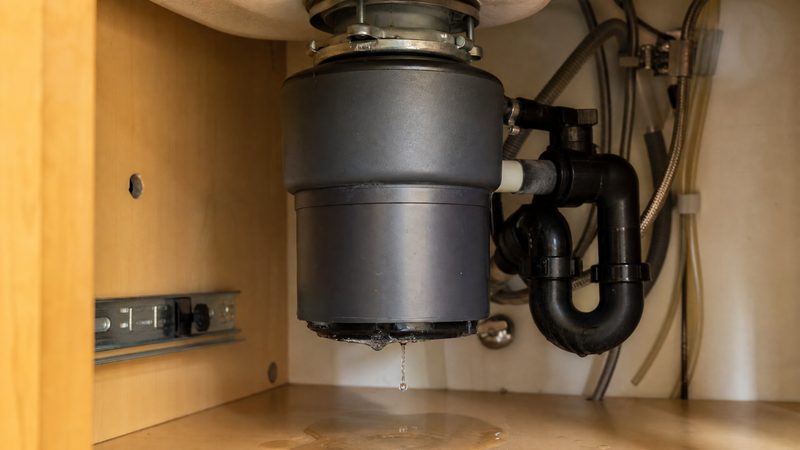
The Fix: If the leak is coming from the top (the sink flange) or the side (the dishwasher connection or drain pipe), a plumber can often fix it by replacing the seals or tightening the connections. However, if water is leaking directly from the bottom of the disposal unit itself, the internal seals have failed. According to plumbing experts, a bottom leak means the unit is unrepairable and must be replaced [2].
Not sure where your disposal is leaking from? Bluebonnet Plumbing can quickly diagnose the issue and let you know whether a repair is possible or if replacement is the smarter option. Call (210) 934-5468 to schedule an inspection today.
Repair vs. Replacement: The Cost Breakdown
When deciding whether to fix your current unit or buy a new one, the math usually dictates the answer. Here's what you can expect to pay in the San Antonio area:
The Cost to Repair
Professional garbage disposal repairs typically range from $100 to $250, depending on the issue and the parts required. Simple fixes like clearing a stubborn jam, replacing a worn sink flange, or fixing a leaky drain connection fall on the lower end of this spectrum.
The Cost to Replace
If your unit is beyond repair, the average cost to install a new garbage disposal is around $550, with most homeowners spending between $200 and $625 for the unit and professional installation [3]. The total price depends heavily on the horsepower and features of the model you choose.
The 50% Rule: A good rule of thumb is that if the cost of the repair is more than 50% of the cost of a new unit, it's smarter to replace it. Given that a basic new disposal can cost as little as $100-$150 (plus labor), extensive repairs on an older unit rarely make financial sense.
Wondering if your disposal is worth fixing? Our licensed plumbers provide honest recommendations and upfront pricing so you can make the most cost-effective decision for your home. Call (210) 934-5468 for expert guidance.
When to Say Goodbye: 4 Signs It's Time to Replace
Even if your disposal is still technically running, it might be time for an upgrade. Watch for these four signs that your unit has reached the end of the line:
- It's More Than 10 Years Old: While some high-end units can last up to 15 years with excellent maintenance, the average lifespan of a garbage disposal is about a decade. If your unit is approaching this age, its motor is likely weakening, and the blades are getting dull.
- Frequent Resets are Required: If you find yourself constantly pressing the red reset button just to get through doing the dishes, the motor is struggling and frequently overheating. This is a clear sign of impending failure.
- It Takes Forever to Grind Food: Do you have to run the water and the disposal for much longer than you used to? As the blades dull over time, the unit loses its efficiency. While you can try the ice-and-salt trick to sharpen them, significantly dull blades usually mean it's time for a new unit.
- Persistent Bad Odors: A smelly disposal is common and can usually be fixed with a good cleaning. However, if you've cleaned the unit thoroughly and a foul odor persists, food particles may be trapped in deep cracks or crevices within an aging unit.
If you're dealing with these issues alongside slow drains in your kitchen, a new disposal can significantly improve your daily routine.
Choosing the Right Size for Your San Antonio Home
If you've decided to replace your garbage disposal, you'll need to choose the right horsepower (HP) for your household's needs. An undersized unit will jam frequently and burn out quickly, while an oversized unit may be unnecessary for your budget.
- 1/3 HP: Best for small households (1-2 people) that rarely cook or use the disposal. These are budget-friendly but prone to jamming if overworked.
- 1/2 HP: The standard choice for typical homes (2-4 people). It handles normal daily food waste well, though you still need to be careful with fibrous foods.
- 3/4 HP to 1 HP: Ideal for larger families (5+ people) or avid home cooks. These powerful units have stronger components, grind food finer (which helps prevent clogs), and often feature better sound insulation for quieter operation.
Recognizing one or more of these warning signs? Don't wait for a complete breakdown. Bluebonnet Plumbing can inspect your garbage disposal and recommend the best replacement option for your household's needs. Contact Us to get started.
How to Extend the Life of Your Garbage Disposal
Whether you've just repaired your current unit or invested in a brand new one, proper maintenance is the key to getting the most out of your garbage disposal. By following a few simple rules, you can easily add years to its lifespan.
The Do's:
- DO run cold water: Always turn on the cold water before you turn on the disposal, keep it running while grinding, and leave it running for 15 seconds after you turn the unit off. Cold water keeps the motor cool and helps solidify any fats so they can be chopped up and flushed away.
- DO cut food into smaller pieces: Don't shove a whole melon rind down the drain. Cut large items into smaller chunks and feed them in gradually.
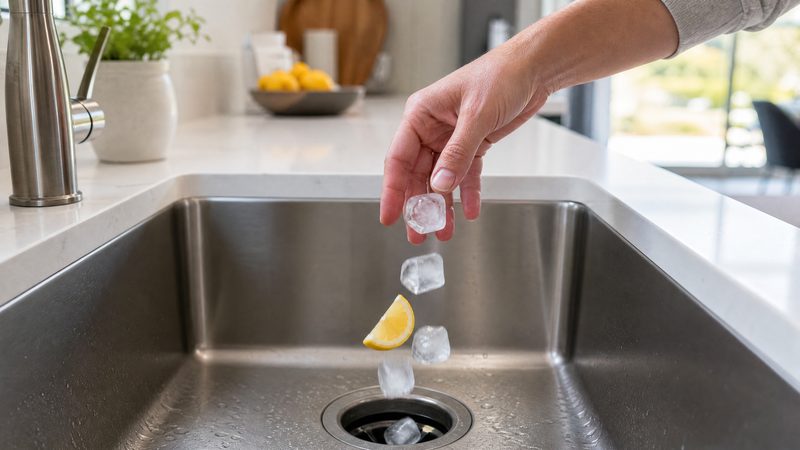
- DO clean it regularly: Once a month, toss a handful of ice cubes and a few lemon wedges down the disposal. The ice helps knock debris off the blades, while the lemon provides a fresh scent.
The Don'ts:
- DON'T pour grease or oil down the drain: This is the number one cause of kitchen plumbing problems. Grease solidifies in your pipes, causing massive clogs that require professional drain cleaning.
- DON'T grind fibrous or starchy foods: Celery stalks, corn husks, onion skins, and artichokes have stringy fibers that can wrap around the blades and burn out the motor. Starchy foods like pasta, rice, and potato peels expand with water and turn into a thick paste that clogs the unit.
- DON'T put hard items in the disposal: Despite the name, garbage disposals are not meant for actual garbage. Never put bones, fruit pits, eggshells, or non-food items (like glass or plastic) down the drain.
- DON'T use harsh chemical cleaners: Chemical drain cleaners can severely damage the plastic and metal components inside your disposal.
Note for San Antonio Homeowners: Our city is known for having some of the hardest water in the country. This hard water can leave mineral deposits inside your disposal and pipes. If you're noticing significant scale buildup, you might want to read our Complete Guide to Solving Hard Water Problems to learn how a water softener can protect all your water-using appliances.
Ready to upgrade your kitchen plumbing?
Whether you need a quick jam cleared or a brand new garbage disposal installed, Bluebonnet Plumbing is here to help. We'll give you an honest assessment of your current unit and help you choose the best replacement for your home.
Contact us today or call (210) 934-5468 to schedule your service.
Frequently Asked Questions
How long do garbage disposals last?
With proper care and maintenance, a typical garbage disposal will last between 10 and 12 years. High-end models with stainless steel components may last up to 15 years, while budget models or heavily abused units may fail in as little as 5 to 8 years.
Why is my garbage disposal leaking from the bottom?
If water is dripping directly from the bottom of the garbage disposal unit (not from the pipes connected to it), the internal seals that protect the motor have failed. This type of leak cannot be repaired, and the entire unit must be replaced immediately to prevent water damage to your cabinets.
Is it worth repairing a garbage disposal?
It is worth repairing a garbage disposal if the unit is less than 7 years old and the repair is simple, such as clearing a jam or replacing a leaky sink flange. However, if the motor has burned out, the unit is leaking from the bottom, or the repair cost exceeds 50% of the price of a new unit, replacement is the better investment.
Where is the reset button on my garbage disposal?
The reset button is a small, usually red button located at the very bottom of the garbage disposal unit under your sink. If the motor overheats or jams, this button will pop out to cut power and protect the motor. Once the unit has cooled or the jam is cleared, press the button back in to restore power.
References
- Bob Vila. "How Long Do Garbage Disposals Last?" https://www.bobvila.com/articles/how-long-do-garbage-disposals-last/
- Angi. "Know When to Replace or Repair a Garbage Disposal." https://www.angi.com/articles/garbage-disposal-repair-and-replacement.htm
- HomeAdvisor. "What Does Garbage Disposal Installation Cost? [2025 Data]" https://www.homeadvisor.com/cost/kitchens/install-a-garbage-disposal/