
If you've lived in San Antonio for any length of time, you've probably noticed the telltale white residue around your faucets, the soap that doesn't quite lather, or the spots on your glassware that won't budge. You're not imagining things—San Antonio has some of the hardest water in the entire United States, and while the San Antonio Water System (SAWS) consistently delivers water that meets all federal safety standards, the unique geology beneath our city creates practical challenges that impact your home, your appliances, and your daily comfort.
At Bluebonnet Plumbing, we've helped countless San Antonio homeowners understand their water quality and find the right water filtration San Antonio solutions for their specific needs. In this comprehensive guide, we'll break down exactly what's in your tap water, why San Antonio's water is the way it is, and how the right filtration system can protect your investment and improve your quality of life.
Ready to learn about water filtration options for your San Antonio home? Call Bluebonnet Plumbing at +1 210-806-7285 to schedule a consultation. We're here Monday–Friday, 8 AM – 5 PM, and we're proud to serve our local community with honest, expert plumbing advice.
Why San Antonio Water Quality Is Unique
San Antonio sits atop one of North America's most remarkable geological features: the Edwards Aquifer. This massive underground reservoir has shaped our city's history, sustained our growth, and continues to provide drinking water to nearly two million people across 26 cities in the greater San Antonio area. But the same limestone geology that makes the Edwards Aquifer so prolific also gives San Antonio water its distinctive—and challenging—characteristics.
According to the most recent SAWS water quality data, our municipal water supply comes from a blend of sources:
- The Edwards Aquifer (our historical primary source)
- Carrizo, Simsboro, Trinity, and Wilcox aquifers
- Surface water from Canyon Lake
- Purchased water from regional suppliers
SAWS has held superior ratings from the Texas Commission on Environmental Quality (TCEQ) since 1936 and reported no EPA violations in the most recent reporting period. The utility samples 390 sites monthly for bacteria and monitors for more than 100 regulated contaminants. From a safety perspective, San Antonio water is excellent—it meets or exceeds all federal drinking water standards set by the U.S. Environmental Protection Agency.
But meeting safety standards and being ideal for your home are two different things. That's where understanding water filtration San Antonio options becomes essential for protecting your investment and improving your daily water experience.
Not sure what's actually in your home's water? Schedule a professional water quality assessment with Bluebonnet Plumbing. We'll help you identify hard water issues, filtration needs, and the best solution for your family.
Understanding the Edwards Aquifer Connection
To understand why water filtration San Antonio systems are so beneficial for local homes, you need to understand the Edwards Aquifer itself. This isn't just any underground water source—it's what geologists call a karst aquifer system, formed in the Balcones Fault Zone from Early Cretaceous-age limestone and dolomite that has been extensively faulted and fractured over millions of years.
Here's what happens underground: as rainwater percolates down through the Edwards recharge zone, it becomes slightly acidic from dissolved carbon dioxide. This mildly acidic water then flows through the limestone and dolomite formations, gradually dissolving calcium carbonate (CaCO₃) from limestone and calcium magnesium carbonate from dolomite. The result? Water that's naturally loaded with dissolved minerals—especially calcium and magnesium.
According to U.S. Geological Survey studies of the Edwards Aquifer, this creates what hydrogeologists classify as "calcium bicarbonate type" groundwater with persistently high hardness levels. In a process called dedolomitization, magnesium from the dolomite is replaced by calcium, further enriching the water with hardness-causing minerals.
This geological reality means that San Antonio's hard water isn't a treatment problem or a municipal water quality issue—it's a permanent feature of our local geology. SAWS can't remove the hardness at the utility level without dramatically changing the water chemistry in ways that would create other problems. That's why point-of-use and whole-home filtration solutions are so valuable for San Antonio homeowners who want to protect their plumbing, extend appliance life, and enjoy better water quality throughout their home.
The Hard Water Challenge: What the Numbers Really Mean
Let's talk specifics. When water quality experts talk about "hardness," they're measuring the concentration of dissolved calcium and magnesium minerals, typically expressed as grains per gallon (gpg) or parts per million (ppm) of calcium carbonate equivalent.
Here's how San Antonio water measures up:
- SAWS typical hardness range: 15–20 grains per gallon
- Equivalent in parts per million: approximately 257–342 ppm
- Water hardness classification: "Very Hard" (anything over 10.5 gpg is considered very hard)
- National comparison: San Antonio ranks among the top cities in the U.S. for water hardness
To put this in perspective, water below 1 gpg is considered "soft," while 3.5–7 gpg is "moderately hard." At 15–20 gpg, San Antonio water is roughly three times harder than what most water quality standards would classify as acceptable for residential use without treatment.
What Hard Water Does to Your Home
While SAWS correctly notes that hard water isn't a health hazard—and may even contribute small amounts of dietary calcium and magnesium—the practical consequences for your home are significant and expensive:
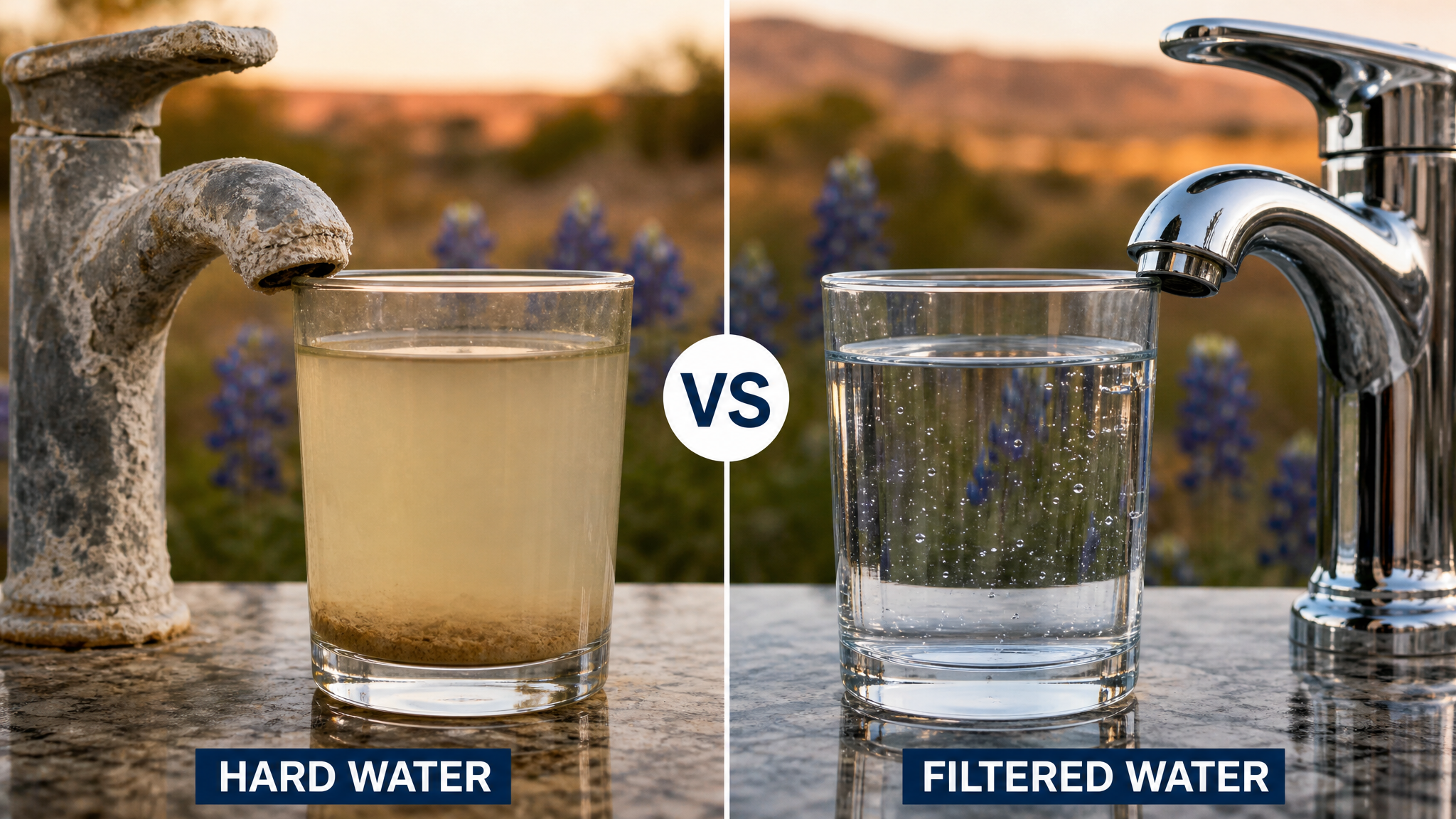
- Limescale buildup on every water-contact surface: faucets, showerheads, aerators, and inside your pipes
- Reduced efficiency and shortened lifespan of water heaters (scale acts as an insulator, forcing your heater to work harder)
- Damage to appliances, including dishwashers, washing machines, and ice makers
- Soap scum that's difficult to remove from tile, glass, and shower enclosures
- Spotting on dishes and glassware even after washing
- Reduced soap effectiveness, requiring you to use more detergent, shampoo, and cleaning products
- Dry skin and hair with a characteristic coated or filmy feeling
- Dull, stiff laundry even with fabric softener
Many San Antonio homeowners don't realize how much they're spending on these hard water problems until they install a water filtration San Antonio system and start seeing the difference. The soap savings alone can offset filtration costs over time, not to mention avoiding premature water heater replacement.
Seeing white buildup on faucets, spots on dishes, or dry skin after showers? These are common signs of San Antonio's hard water. Our team can recommend and install the right water softener for your home. Contact Us now.
Tired of hard water damage and scale buildup? Bluebonnet Plumbing can assess your home's water quality and recommend the right filtration solution for your needs and budget. Call us at +1 210-806-7285 Monday–Friday, 8 AM – 5 PM to get started.
What's Actually In Your Tap Water? A Detailed Look
Beyond hardness, San Antonio water contains several other substances that, while safe at current levels, may be worth filtering depending on your preferences and household needs.
Chlorine Disinfectant
SAWS adds approximately 1.0 parts per million (ppm) of chlorine at production facilities to ensure your water remains bacteria-free as it travels through miles of distribution pipes to your home. The Texas Commission on Environmental Quality requires public water systems to maintain at least 0.2 ppm residual chlorine and stay below 4.0 ppm.
Chlorine is highly effective at killing bacteria and making water safe to drink, but it also affects taste and odor. Many people describe chlorinated water as having a "pool-like" or chemical taste. Chlorine can also react with organic matter in water to form disinfection byproducts, which is why many homeowners choose activated carbon filtration to remove chlorine at the point of use.
Added Fluoride
Following a voter-approved ordinance in November 2000, SAWS supplements the natural fluoride in San Antonio water. The background level is about 0.3 ppm, and SAWS adjusts it to a target of 0.7 ppm—consistent with U.S. Public Health Service recommendations for dental health.
While fluoride supplementation is endorsed by major health organizations for cavity prevention, some families prefer to control their fluoride intake through other means. SAWS explicitly acknowledges that reverse osmosis (RO) filtration can remove up to 98% of fluoride for customers who wish to reduce it.
Total Dissolved Solids (TDS)
Total dissolved solids is a measure of everything dissolved in water—minerals, salts, metals, and organic matter. The EPA's secondary (aesthetic) guideline suggests water should stay below 500 ppm TDS. According to third-party testing data, San Antonio water has a TDS of around 585 ppm, exceeding this aesthetic guideline.
High TDS contributes to mineral taste, scale formation, and that distinctive "heavy" feeling some people notice in San Antonio water. It's not a health concern at these levels, but it's one more reason why water filtration systems in San Antonio—particularly reverse osmosis—are so popular in our area.
Lead (From In-Home Plumbing)
This is an important distinction: SAWS water is essentially lead-free when it leaves the treatment facility. However, lead can leach into your water from older household plumbing components—pipes, solder, fixtures, and brass fittings—particularly in homes built before 1986.
SAWS maintains a service-line inventory and offers tap testing, but if you live in an older home or have any concerns about lead exposure (especially for children or pregnant women), point-of-use filtration provides an extra layer of protection where it matters most: at your kitchen tap.
PFAS and Emerging Contaminants
Per- and polyfluoroalkyl substances (PFAS), sometimes called "forever chemicals," have become a major focus of water quality monitoring nationwide. As of the most recent assessment, PFAS have not been detected above EPA advisory levels in the SAWS supply. The EPA established new maximum contaminant levels for several PFAS compounds in 2024, and SAWS monitoring indicates compliance.
This is an evolving area of regulation and testing, and it's one more reason many families choose comprehensive water filtration San Antonio systems for peace of mind.
How Water Filtration Systems Protect Your San Antonio Home
Now that you understand what's in San Antonio water, let's talk about solutions. The right filtration approach for your home depends on your priorities—whether you're focused on protecting appliances from scale, improving taste and odor, reducing specific contaminants, or achieving comprehensive whole-home water quality improvement.
Water Softeners (Ion Exchange Systems)
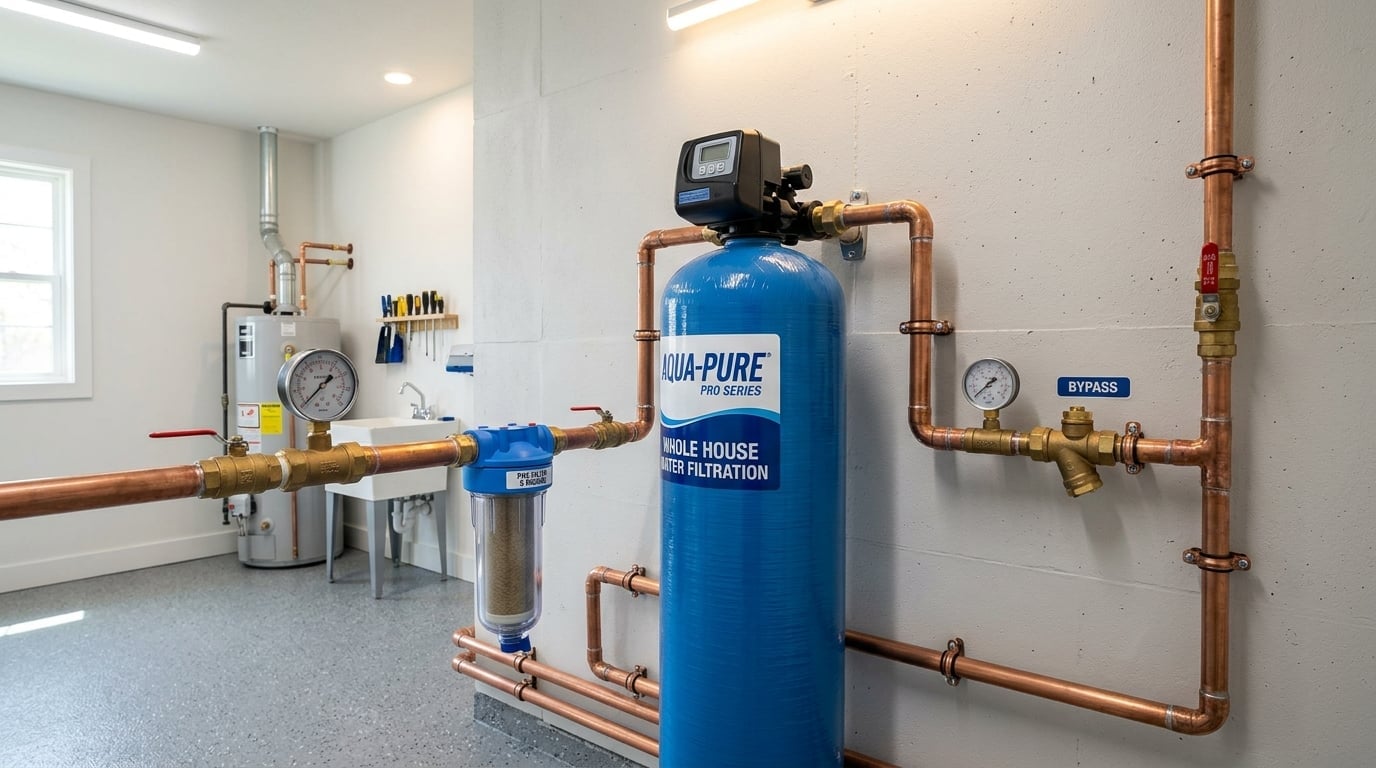
For San Antonio homes, a water softener is often the foundation of any water filtration San Antonio strategy. These systems use ion exchange technology to remove calcium and magnesium—the minerals responsible for hardness—and replace them with sodium or potassium ions.
Benefits of water softening include:
- Elimination of limescale buildup in pipes and on fixtures
- Extended water heater life (manufacturers like Rheem note that hard water significantly reduces heater efficiency and longevity)
- Softer skin and hair
- Cleaner dishes and spot-free glassware
- Reduced soap and detergent usage (soft water lathers much more effectively)
- Brighter, softer laundry
- Lower energy bills (your water heater doesn't have to work through scale buildup)
For a water hardness level of 15–20 grains per gallon, a properly sized water softener can make a transformative difference in your home. Most San Antonio homeowners who install a softener wish they'd done it years earlier.
Activated Carbon Filtration
Activated carbon filters use a bed of specially processed carbon with an enormous surface area to trap and remove chlorine, chloramines, volatile organic compounds (VOCs), and substances that affect taste and odor. These filters can be installed at individual faucets (point-of-use) or for your entire home (whole-house carbon filtration).
Carbon filtration is excellent for:
- Removing chlorine taste and odor
- Improving the overall taste of drinking water
- Reducing exposure to disinfection byproducts
- Protecting against certain organic contaminants
In San Antonio, carbon filtration is often combined with a water softener to address both the mineral content and the disinfectant taste.
Reverse Osmosis (RO) Systems
Reverse osmosis is the most comprehensive point-of-use filtration technology available for residential use. RO systems force water through a semi-permeable membrane that removes up to 98–99% of dissolved solids, including:
- Fluoride
- Lead and heavy metals
- Total dissolved solids (TDS)
- Chlorine and chloramines
- Nitrates and sulfates
- Sodium (including sodium added by water softeners)
- Many emerging contaminants
SAWS itself recommends RO filtration for customers who wish to remove fluoride and dissolved minerals. Most RO systems are installed under the kitchen sink with a dedicated faucet, providing premium filtered water for drinking, cooking, coffee, and ice.
Many San Antonio homeowners combine a whole-home water softener (to protect appliances and plumbing) with a point-of-use RO system at the kitchen sink (for the highest quality drinking water). This gives you the best of both worlds: scale-free plumbing throughout your home and ultra-pure water where you need it most.
Whole-House Sediment Filters
While not addressing the dissolved mineral content, sediment filters protect your entire water system by removing particulate matter, rust, and turbidity before water reaches your fixtures and appliances. These are often installed as the first stage of a multi-stage filtration system and help protect more expensive downstream filters and equipment.
Choosing the Right Water Filtration System for San Antonio Homes
There's no one-size-fits-all answer when it comes to water filtration San Antonio solutions. The right system for your home depends on several factors:
- Your water quality priorities: Are you mainly concerned about hard water damage, taste and odor, specific contaminants, or comprehensive filtration?
- Your home's plumbing age: Older homes with original plumbing may benefit more from point-of-use lead filtration
- Your household size: Larger families need appropriately sized systems with adequate flow rates
- Your budget and space: Whole-house systems require more upfront investment and installation space than point-of-use solutions
- Maintenance preferences: Different systems have different maintenance requirements (salt for softeners, filter cartridge replacements, membrane replacements, etc.)
Common San Antonio Filtration Configurations
Basic Protection: Whole-house sediment filter + activated carbon filter at kitchen sink
Standard Protection: Whole-house water softener + activated carbon filter at kitchen sink
Comprehensive Protection: Whole-house water softener + whole-house carbon filter + reverse osmosis system at kitchen sink
Premium Protection: Multi-stage whole-house system (sediment + carbon + softener) + reverse osmosis at kitchen and bathrooms
The best approach is to work with a knowledgeable local plumber who understands San Antonio water conditions and can assess your specific situation. At Bluebonnet Plumbing, we've installed countless water filtration systems throughout the area, and we're always happy to provide honest recommendations based on your actual needs—not sales quotas.
What About Bottled Water?
Many San Antonio families spend hundreds of dollars per year on bottled water for drinking and cooking. While bottled water is certainly an option, it's worth noting that:
- Much bottled water is simply filtered municipal water (check the label—many brands are "from a municipal source")
- The plastic waste is significant and expensive to dispose of properly
- The long-term cost typically exceeds the investment in a home filtration system
- You're still using unfiltered hard water for showers, laundry, and dishwashing
A comprehensive home filtration system addresses water quality throughout your entire home, not just at the drinking glass. And over five years, it's almost always more economical than continuing to buy bottled water.
Maintaining Your Water Quality Long-Term
Once you've invested in a water filtration San Antonio system, proper maintenance ensures you continue to get the best performance and longest equipment life. Different systems have different maintenance requirements:
Water Softeners: Require periodic salt or potassium chloride refills (monthly to quarterly depending on water usage and hardness), occasional resin bed cleaning, and annual professional inspection.
Carbon Filters: Cartridges typically need replacement every 6–12 months depending on usage and water quality. Reduced flow rate or return of chlorine taste indicates it's time for a change.
Reverse Osmosis Systems: Pre-filters and post-filters need replacement every 6–12 months, while the RO membrane typically lasts 2–3 years. Storage tanks should be checked for proper air pressure annually.
Sediment Filters: Need replacement every 3–6 months depending on the particulate load in your water.
Most homeowners find that the maintenance is straightforward and well worth it for the benefits. And if you'd rather have a professional handle it, regular maintenance visits ensure your system always performs at its best.
Frequently Asked Questions About San Antonio Water Quality and Filtration
Is San Antonio tap water safe to drink?
Yes, SAWS water consistently meets all federal safe drinking water standards set by the EPA. SAWS has held superior ratings from the Texas Commission on Environmental Quality since 1936 and reported no EPA violations in the most recent reporting period. The water is thoroughly tested—SAWS samples 390 sites monthly for bacteria and monitors for more than 100 regulated contaminants. However, while the water is safe, many homeowners choose filtration to address hardness, improve taste, and protect their plumbing and appliances from San Antonio's extremely hard water.
Why does San Antonio have such hard water?
San Antonio's hard water comes directly from the geology of the Edwards Aquifer and other limestone-based aquifer systems that supply our water. As groundwater flows through limestone and dolomite formations underground, it naturally dissolves calcium and magnesium minerals. This geological process creates water hardness levels of 15–20 grains per gallon—among the highest in the United States. Because the source rock is the cause, this hardness is a permanent feature that can't be eliminated at the utility level, which is why home water filtration San Antonio systems are so beneficial.
Will a water softener remove everything from my water?
No, water softeners are specifically designed to remove hardness-causing minerals (calcium and magnesium) through ion exchange. They're extremely effective for preventing scale buildup and protecting appliances, but they don't remove chlorine, fluoride, lead, or other dissolved contaminants. For comprehensive water filtration San Antonio coverage, most homeowners combine a water softener with additional filtration—such as activated carbon filters for chlorine removal or a reverse osmosis system for more thorough contaminant reduction at the kitchen tap.
How much does a whole-house water filtration system cost in San Antonio?
The cost of a water filtration San Antonio system varies widely based on the type of system, the size of your home, and the specific water quality challenges you're addressing. A basic whole-house sediment filter might cost a few hundred dollars, while a comprehensive system combining softening, carbon filtration, and point-of-use reverse osmosis could range into the thousands. However, these systems typically pay for themselves over time through reduced appliance repairs, lower energy bills, eliminated bottled water purchases, and decreased soap and detergent usage. The best approach is to get a personalized assessment—at Bluebonnet Plumbing, we provide honest recommendations based on your specific needs and budget.
Do I need to filter my water if SAWS says it's safe?
That depends on your goals. SAWS water is safe to drink according to federal health standards, so filtration isn't necessary from a basic safety perspective for most households. However, filtration provides significant quality-of-life and cost-saving benefits in San Antonio. Hard water at 15–20 grains per gallon causes expensive scale damage to water heaters, reduces appliance lifespan, creates soap scum and spotting problems, and affects the feel of your water. Many homeowners also prefer to remove the chlorine taste, reduce fluoride, or add an extra layer of protection against lead from older plumbing. Think of water filtration San Antonio systems as an investment in your home's infrastructure and your family's comfort, not just a safety necessity.
How often do I need to maintain my water filtration system?
Maintenance frequency depends on the type of system you have. Water softeners need salt refills every few weeks to months (depending on usage) and an annual professional inspection. Carbon filters typically need cartridge replacement every 6–12 months. Reverse osmosis systems require filter changes every 6–12 months and membrane replacement every 2–3 years. Sediment filters may need replacement every 3–6 months. Most systems will give you clear signs when maintenance is needed—reduced flow rate, return of hard water symptoms, or changes in taste. Many San Antonio homeowners set up annual service visits with their plumber to handle all maintenance at once and ensure optimal system performance.
Can I install a water filtration system myself?
Some simple point-of-use filters (like countertop or faucet-mount carbon filters) are designed for DIY installation. However, whole-house systems, water softeners, and under-sink reverse osmosis units typically require professional plumbing knowledge to install correctly. Proper installation ensures your system works efficiently, doesn't leak, doesn't violate plumbing codes, and is properly sized for your home's water pressure and flow requirements. In San Antonio, where plumbing codes and water hardness levels require specific considerations, professional installation is usually the best investment to protect your warranty and ensure long-term performance.
Will filtered water taste different?
Yes—and that's one of the main benefits! Most people find that filtered water tastes significantly better than unfiltered San Antonio tap water. Removing chlorine eliminates the chemical taste, reducing total dissolved solids creates a cleaner, lighter feel, and softening removes the mineral taste many people associate with hard water. Reverse osmosis filtered water tastes particularly clean and pure because it removes up to 99% of dissolved contaminants. Many San Antonio families who install water filtration San Antonio systems report that they actually enjoy drinking water from their tap for the first time—and immediately stop buying bottled water.
How long do water filtration systems last?
With proper maintenance, quality water filtration systems can last many years. Water softener control valves and tanks typically last 10–15 years or more. Reverse osmosis systems (with regular filter and membrane replacement) can provide service for 10–15 years. Whole-house carbon filter housings can last 10+ years, though the filter media inside requires regular replacement. The key to longevity is following the manufacturer's maintenance schedule and using a reputable installer who sizes and configures the system correctly for your home. Many San Antonio homeowners find that their filtration system is one of the best long-term investments they make in their property.
Your Partner for Cleaner Water in San Antonio
Understanding your water quality is the first step toward making informed decisions about filtration. San Antonio's unique geology creates water challenges that are different from almost anywhere else in the country—but those challenges are well understood and completely manageable with the right approach.
At Bluebonnet Plumbing, we've built our reputation on honest, expert service to San Antonio homeowners. We understand local water conditions; we know which water filtration San Antonio systems perform best in our climate and with our water chemistry, and we're committed to providing recommendations based on your actual needs—not pressure sales tactics.
Whether you're dealing with limescale buildup that's damaging your appliances, concerned about what's in your drinking water, or simply tired of the taste and feel of hard water, we can help you find the right solution. Every home is different, and we take the time to assess your specific situation before making recommendations.
Our service area includes all of San Antonio and the surrounding communities, and we're proud to be a local company serving local families. We're here Monday through Friday, 8 AM to 5 PM—call us during business hours, and we'll be happy to answer your questions, schedule a consultation, or provide guidance on any plumbing need.
Ready to improve your home's water quality? Contact Bluebonnet Plumbing at +1 210-806-7285 to discuss your water filtration San Antonio options. We're located at 1917 El Monte Blvd, San Antonio, TX 78201, and we're here Monday–Friday, 8 AM – 5 PM. Let's work together to find the perfect water solution for your home.
Your water quality impacts your daily life in countless ways—from the morning shower to the evening dishes, from your appliance longevity to your monthly utility bills. With the right filtration system, you can protect your investment, improve your comfort, and enjoy truly clean water throughout your San Antonio home. And with Bluebonnet Plumbing as your partner, you can trust that you're getting expert advice from people who know and care about our local community.
For more information about San Antonio water quality, visit the official SAWS Water Quality page to review current testing data and water quality reports for your service area.