
There are few things more frustrating than stepping into the shower only to be greeted by a weak trickle of water, or trying to wash dishes while the kitchen faucet barely manages a steady stream. If you're a San Antonio homeowner asking yourself, "Why do I have low water pressure?" — you're not alone.
Low water pressure is one of the most common plumbing complaints in our area. From the notoriously hard water supplied by the Edwards Aquifer to failing pressure-reducing valves (PRVs) and aging galvanized pipes, several culprits can throttle your home's water flow. According to the San Antonio Water System (SAWS), water pressure within its service area can range anywhere from 35 to 175 pounds per square inch (psi) — but the ideal pressure for a residential home should sit between 40 and 60 psi comfortably.
In this guide, the experts at Bluebonnet Plumbing break down the top causes of low water pressure in San Antonio homes, how to test your pressure yourself, and when it's time to call in a licensed plumber to fix it for good.
Experiencing Low Water Pressure Right Now?
Low water pressure can be caused by anything from hard water buildup to hidden slab leaks. If you're tired of weak showers or slow-running faucets, call Bluebonnet Plumbing at (210) 934-5468 for fast diagnosis and repair anywhere in the San Antonio area.
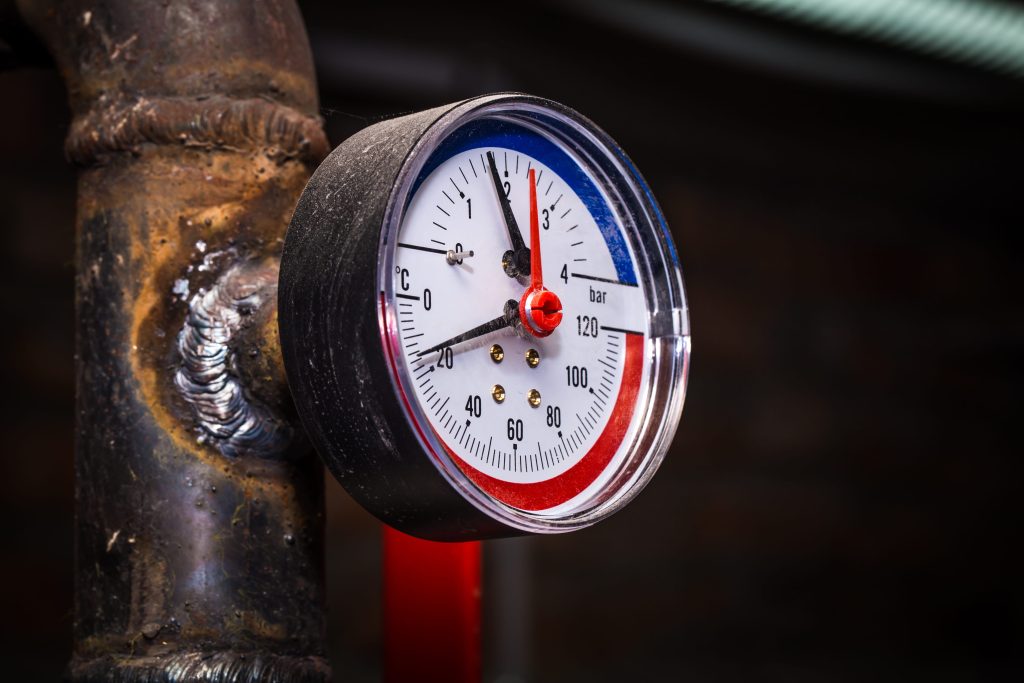
The Top Causes of Low Water Pressure in San Antonio Homes
1. Hard Water Mineral Buildup and Scale
If you live in San Antonio, you are no stranger to hard water. Our municipal water supply is sourced primarily from the Edwards Aquifer, a limestone formation that imparts high concentrations of dissolved calcium and magnesium to the water. San Antonio's water hardness frequently exceeds 357 milligrams per liter (mg/L) — well above the 120 mg/L threshold the U.S. Geological Survey classifies as "very hard." [1]
Over time, these minerals precipitate out of the water and form calcium carbonate scale (limescale) inside your plumbing system. This buildup acts like clogged arteries in your home's pipes, gradually narrowing the interior diameter and restricting water flow. The U.S. Department of Energy notes that just 6 mm (¼ inch) of scale on a water heater element can reduce heating efficiency by up to 40% — and the same principle applies to your supply lines. [1]
The Fix: If mineral buildup is isolated to a single fixture, you can often restore pressure by removing the faucet aerator or showerhead and soaking it in distilled white vinegar for a few hours. However, if the scale has compromised your entire plumbing system, you may need professional pipe descaling or replacement. Installing a water softener in your San Antonio home is the single best long-term preventative measure against hard water scale damage.
Concerned About Hard Water Damage?
San Antonio's hard water can silently damage pipes, water heaters, faucets, and fixtures. Our team can inspect your plumbing system and recommend the right water treatment solution. Contact Us to Book a Water Quality Evaluation.
2. A Failing Pressure Reducing Valve (PRV)
Because municipal water pressure from SAWS can reach up to 175 psi in certain parts of the service area, most homes are equipped with a Pressure Reducing Valve (PRV) to protect indoor plumbing. [2] A PRV is a bell-shaped device typically installed on the main water line near your water meter or where the line enters your house. Its job is to step down the high city pressure to a safe, appliance-friendly level of 40–60 psi.
However, PRVs don't last forever. They contain internal springs and rubber diaphragms that degrade over time. The average lifespan of a PRV is about 10 to 15 years. [3] When a PRV begins to fail, it can cause:
- Unpredictable pressure fluctuations throughout the house
- Water hammer — the banging or vibrating pipes you hear when you quickly shut off a faucet
- A sudden, persistent drop in water pressure at every fixture simultaneously
- Excessively high pressure (above 80 psi) can damage appliances and burst flex lines
The Fix: Replacing a PRV requires cutting into the main water line and fitting new connections — this is not a recommended DIY project. If you suspect your PRV is failing, contact a licensed San Antonio plumber for a professional PRV inspection and replacement to ensure it is calibrated correctly and installed safely.
3. Hidden Leaks and Slab Leaks
If your water pressure drops suddenly and stays low, you might have a hidden water leak. When water escapes from a compromised pipe before it reaches your fixtures, the resulting pressure drop will be noticeable throughout your home. In San Antonio, where shifting clay soils and the region's expansive geology put constant stress on foundations, slab leaks — leaks occurring in the pipes beneath your concrete foundation — are a frequent and serious issue.
Warning signs of a hidden or slab leak include an unexplained spike in your SAWS water bill, the sound of running water when all fixtures are turned off, warm spots on your floor (indicating a hot water line slab leak), or pooling water in your yard or around your foundation.
The Fix: Turn off all water inside and outside your home and check your water meter. If the dial is still spinning, you're leaking somewhere. Call Bluebonnet Plumbing immediately at (210) 934-5468 for expert leak detection and repair services before the damage worsens.
4. Aging Galvanized Steel Pipes
If you live in one of San Antonio's historic neighborhoods or in a home built before the 1980s, your plumbing system might feature galvanized steel pipes. Over decades of use, galvanized pipes corrode from the inside out. This internal rust combines with San Antonio's hard-water scale to create massive composite blockages that severely restrict water flow. By the time galvanized pipes are 40 to 50 years old, the flow restriction can be so severe that taking a shower while the washing machine is running becomes nearly impossible.
The Fix: Unfortunately, there is no effective way to clean out severely corroded galvanized pipes. The only permanent solution is a whole-house repipe, replacing the old steel lines with modern, scale-resistant materials like cross-linked polyethylene (PEX) or copper Type L — both of which are code-approved for high-hardness environments in Texas. [1]
You could expand it like this so it matches the format of the other causes in the blog:
5. Failing Water Softener
If your home has a water softener, it could be the source of your low water pressure. Over time, the resin bed can become clogged with sediment or mineral buildup, internal valves can wear out, or the bypass valve may not fully open. Any of these issues can restrict water flow throughout your home. If bypassing the water softener restores normal pressure, it's a strong sign the unit needs maintenance or repair.
The Fix: Have your water softener inspected and serviced by a professional. Depending on the issue, the system may need to be cleaned, repaired, reprogrammed, or have worn components replaced. If the unit is older or beyond repair, replacing it with a new water softener can restore proper water flow and pressure throughout your home.
6. Partially Closed Shut-Off Valves
This is one of the most overlooked — and easiest to fix — causes of low water pressure. Your home has two main shut-off valves: the water meter valve (controlled by SAWS) and the main house shut-off valve (your responsibility, typically located near the meter or where the line enters your home). If either valve was partially closed during a repair and never fully reopened, your entire home will experience reduced flow. [2]
The Fix: Locate both shut-off valves and ensure they are turned fully counterclockwise (open). If you have a ball valve, the handle should be parallel to the pipe. This takes less than a minute and costs nothing.
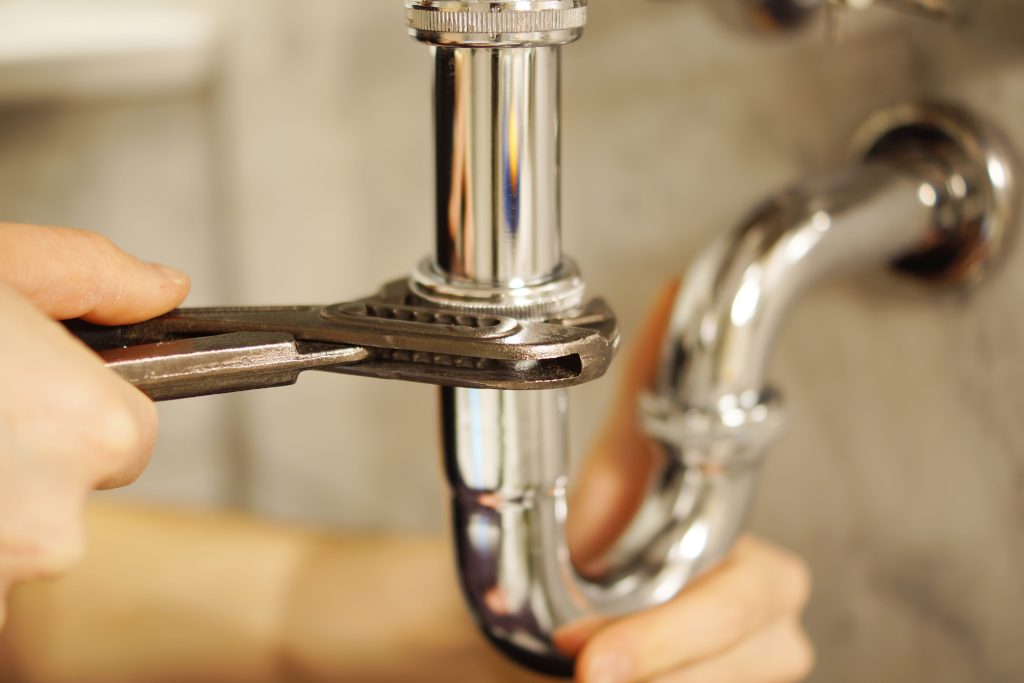
How to Test Your Home's Water Pressure in 5 Minutes
Before calling a plumber, you can easily test your home's water pressure yourself. All you need is a standard water pressure gauge, available at any local hardware store for about $10–$15. Here's how to do it:
- Make sure no water is being used anywhere inside or outside the house — turn off dishwashers, washing machines, sprinklers, and ice makers.
- Locate an outdoor hose bib (spigot) closest to where the main water line enters your home.
- Screw the pressure gauge tightly onto the spigot.
- Turn the spigot on all the way.
- Read the dial. A healthy residential plumbing system should read between 50 and 80 psi. [4]
| Reading (psi) | What It Means | Action Required |
|---|---|---|
| Below 40 psi | Low pressure — comfort and appliance issues | Call a licensed plumber to diagnose |
| 40–60 psi | Ideal residential range | No action needed |
| 61–80 psi | Acceptable but on the higher end | Monitor; consider PRV adjustment |
| Above 80 psi | Dangerously high — risk of pipe and appliance damage | Call a plumber immediately for PRV installation/adjustment |
If your reading is below 40 psi, you have a confirmed low-pressure problem that warrants professional diagnosis. If it's above 80 psi, your pressure is dangerously high and can damage appliances, burst washing machine hoses, and shorten the life of your entire plumbing system. Both scenarios require professional attention.
Tested Your Water Pressure?
If your home's pressure falls below 40 psi or exceeds 80 psi, professional diagnosis can prevent costly plumbing damage. Contact Us to request a water pressure inspection.
When to Call a Licensed San Antonio Plumber
Some low-pressure issues — like a clogged aerator or a partially closed valve — are simple DIY fixes. But many of the most common causes in San Antonio require the tools, expertise, and licensing of a professional plumber. You should call Bluebonnet Plumbing if:
- Your pressure is low at every fixture simultaneously (suggesting a PRV, main valve, or leak issue)
- You suspect a slab leak or a hidden pipe leak
- Your home was built before 1980 and still has galvanized steel pipes
- Your pressure fluctuates wildly throughout the day
- You hear banging pipes (water hammer) when shutting off faucets
- Your water pressure has been declining gradually over months or years
Also, don't forget that San Antonio's hard water is an ongoing threat to your plumbing system. For a comprehensive look at how to protect your home from hard water damage, read our guide: Is Your Water Safe? Understanding San Antonio Water Quality and Filtration.
Frequently Asked Questions About Low Water Pressure in San Antonio
Can SAWS fix my low water pressure?
SAWS is responsible for the municipal water mains up to your water meter. If the pressure issue is caused by a main break or a neighborhood-wide outage, SAWS will address it. However, if the issue stems from your PRV, internal pipes, or a leak on your property (past the meter), it is the homeowner's responsibility to hire a licensed plumber. You can report suspected main-line pressure issues to SAWS at 210-704-SAWS (7297). [2]
Does a water softener lower water pressure?
A properly sized and maintained water softener should not noticeably decrease your water pressure. However, if the resin bed is fouled or the system is malfunctioning, it can create a bottleneck. You can test this by temporarily putting your softener in "bypass" mode. If your pressure instantly improves, the softener is the culprit and needs servicing.
Is 70 psi good water pressure?
Yes, 70 psi is on the higher end of the normal range and provides excellent flow for showers and appliances. However, anything above 80 psi puts excessive strain on your plumbing system and should be regulated with a properly calibrated PRV. [4]
Why is my water pressure low only in the shower?
If the pressure drop is isolated to one fixture, the problem is almost certainly local to that fixture. The most common culprits are a clogged showerhead (mineral scale from San Antonio's hard water), a faulty mixer valve cartridge, or a kinked or partially closed supply line feeding that fixture. Try soaking the showerhead in vinegar overnight. If that doesn't resolve it, the cartridge may need replacement.
How much does PRV replacement cost in San Antonio?
PRV replacement costs in San Antonio typically range from $200 to $600 depending on the valve type, accessibility, and labor involved. While this may seem like a significant expense, a failing PRV left unaddressed can lead to burst pipes, damaged appliances, and water damage repairs that cost thousands of dollars. It is a worthwhile investment in your home's long-term plumbing health.
What is the normal water pressure for a house?
The standard recommended water pressure for a residential home is between 40 and 60 psi, with most building codes considering anything above 80 psi too high. Most water pressure regulators are set to allow up to 75 psi. If you're unsure of your home's current pressure, a $10 gauge from any hardware store will give you an immediate answer. [4]
Ready to Restore Your Water Pressure? Bluebonnet Plumbing Is Here to Help.
Don't let low water pressure ruin your daily routine or quietly damage your home's plumbing system. Whether you're dealing with stubborn hard water scale, a broken pressure-reducing valve, aging galvanized pipes, or a hidden slab leak, the licensed and insured team at Bluebonnet Plumbing has the tools and experience to diagnose and resolve the issue quickly and affordably.
We proudly serve homeowners throughout the greater San Antonio area with honest, expert plumbing service. Call us today at (210) 934-5468 or use the contact form below to schedule your consultation. Let us help you get the strong, reliable water flow your San Antonio home deserves.
References
- [1] Texas Plumbing Authority. "Hard Water and Mineral Buildup Challenges in Texas Plumbing." texasplumbingauthority.com
- [2] San Antonio Water System (SAWS). "Water Pressure Problems?" saws.org
- [3] 535 Plumbing. "Signs That Your Pressure Reducing Valve is Failing." 535plumbing.com
- [4] The Spruce. "How to Test Your Home's Water Pressure." thespruce.com